The research report is open, the team agrees the findings are interesting, and someone asks, “So what are we going to do?” The room moves quickly from a customer quote to a proposed solution.
That energy is valuable. Give it a little structure and you can turn a useful finding into a decision the team understands. You don't need another long document. You need a clear connection between what people described, what it might mean, and the action you're choosing to explore.
Start with the experience you heard
Imagine a service team learning that participants were unsure whether an online request had been received. Some checked their inbox repeatedly; others contacted support. The report includes examples of that uncertainty.
A useful finding could be, “Several participants couldn't tell whether their request was complete after submission.” It names the experience. “We need a new notification system” is a possible response, and it belongs later in the conversation.
The GOV.UK guide to analyzing research separates observations, findings, and actions. That distinction gives your team room to consider more than the first solution someone suggests. You can agree on the problem while exploring different ways to address it.
Ask what supports the finding
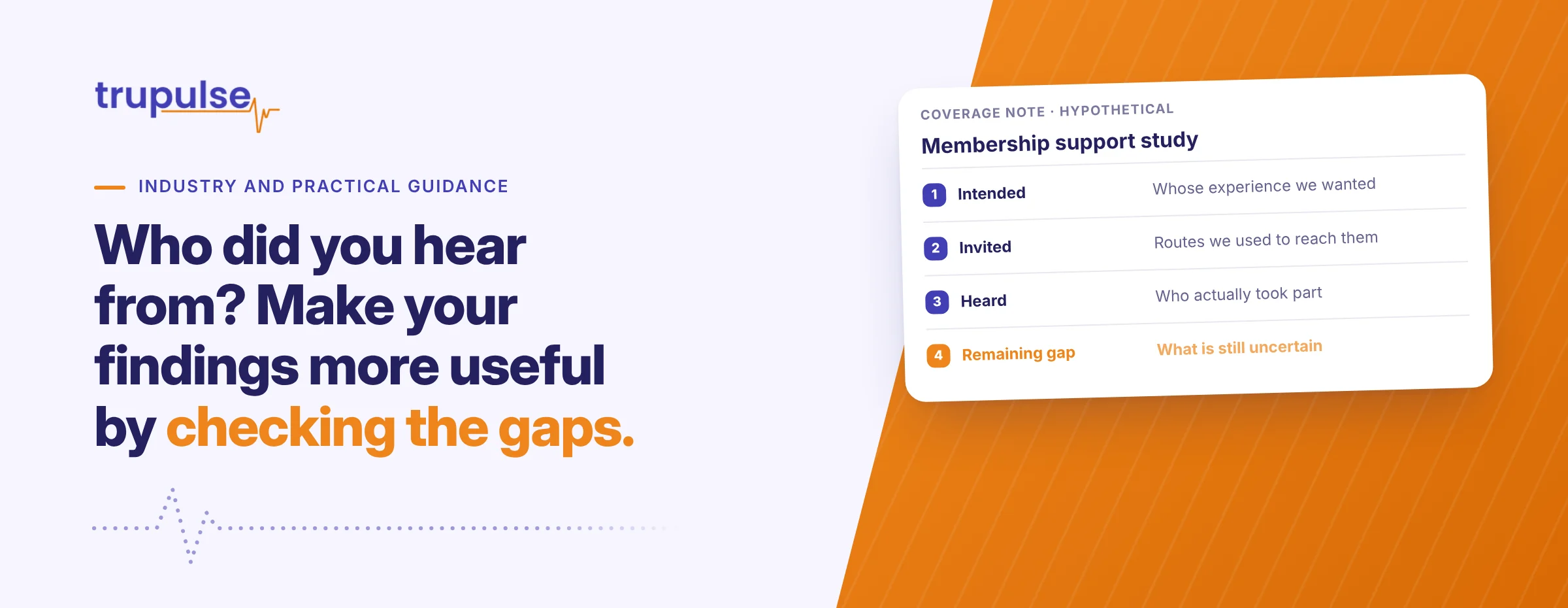
Take a short look at the evidence behind the summary. Which participants described the experience? What happened in their examples? Did anyone describe a different experience? Keep the scope of the study visible, including any important perspectives you haven't heard.
Suppose uncertainty appeared among participants submitting one particular request type. That might point to a specific confirmation message rather than the whole system. If others understood the message but wanted progress updates later, that is a different need.
Quotes can make an experience tangible, but one memorable line shouldn't decide the priority by itself. Consider how the finding relates to the service goal, other relevant evidence, and the consequences of leaving it unexplored. A lower-frequency issue can still matter; explain the reason you are giving it attention.
Put two plausible options on the table
For the hypothetical submission problem, one option is clearer confirmation wording: what was received, whether anything else is required, and what happens next. Another is a change to how residents or customers can check progress later. The first addresses immediate uncertainty; the second addresses ongoing status.
Ask what would need to be true for each option to help. Clearer wording won't solve a missing submission record. A status page won't help someone who doesn't know it exists. These are questions for the people responsible for the service and the evidence available to them.
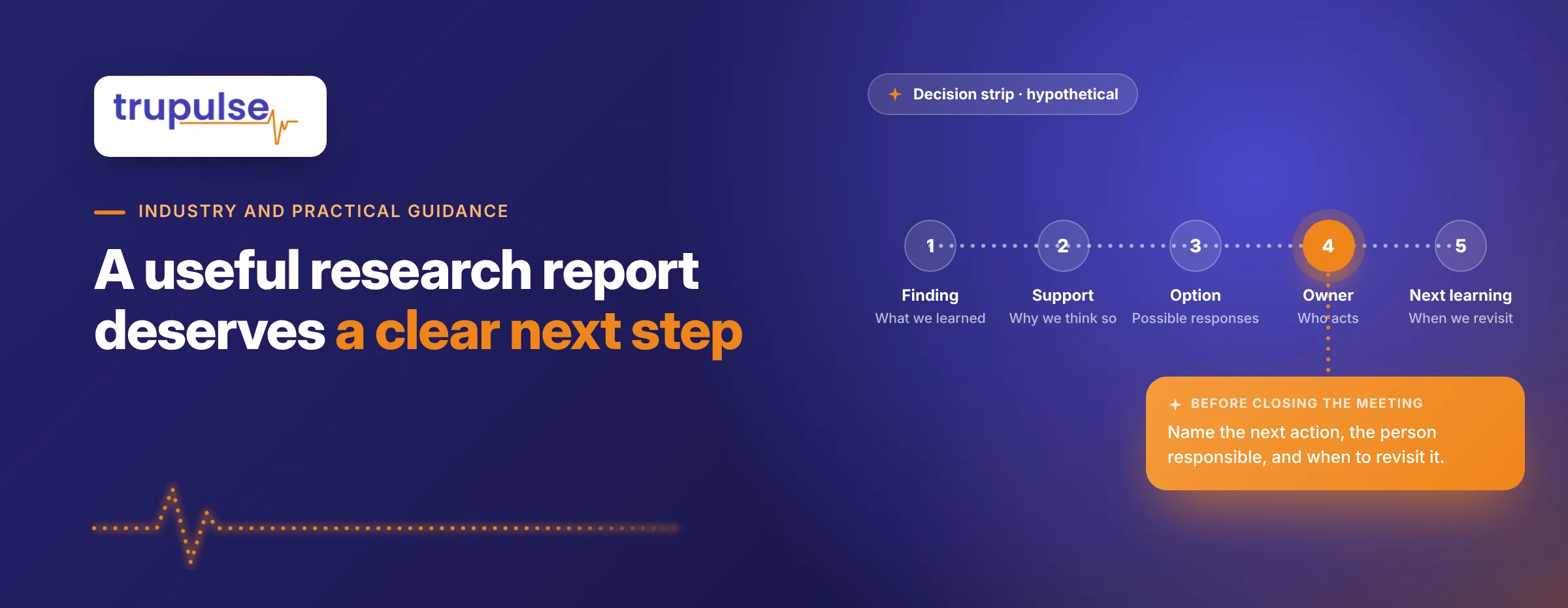
You can keep the meeting grounded with five short notes: the finding, the supporting evidence, the possible response, the owner, and what you want to learn next. The point is a usable decision record, not a complicated scoring exercise.
If the evidence doesn't yet distinguish the options, choose a follow-up that can. Your team could review a small set of relevant service records under its access arrangements, explore another experience group, or try a revised message with intended users.
Choose an action that teaches you something
For a wording change, an initial step might be asking relevant users to read a revised confirmation and explain what they think happened and what they would do next. That can help you see whether the meaning is clear before considering a broader release.
Decide in advance what the team will look for. Do people understand whether the request is complete? Can they identify the next step? Are they still uncertain about the waiting period? Record what you learn, including anything that challenges the proposal.
A clearer interpretation in this exercise would support the wording decision. It wouldn't, by itself, prove a reduction in support demand or a broader business outcome. Match the claim to the check you performed, then decide whether further operational evidence is needed.
Make the report the beginning of a conversation
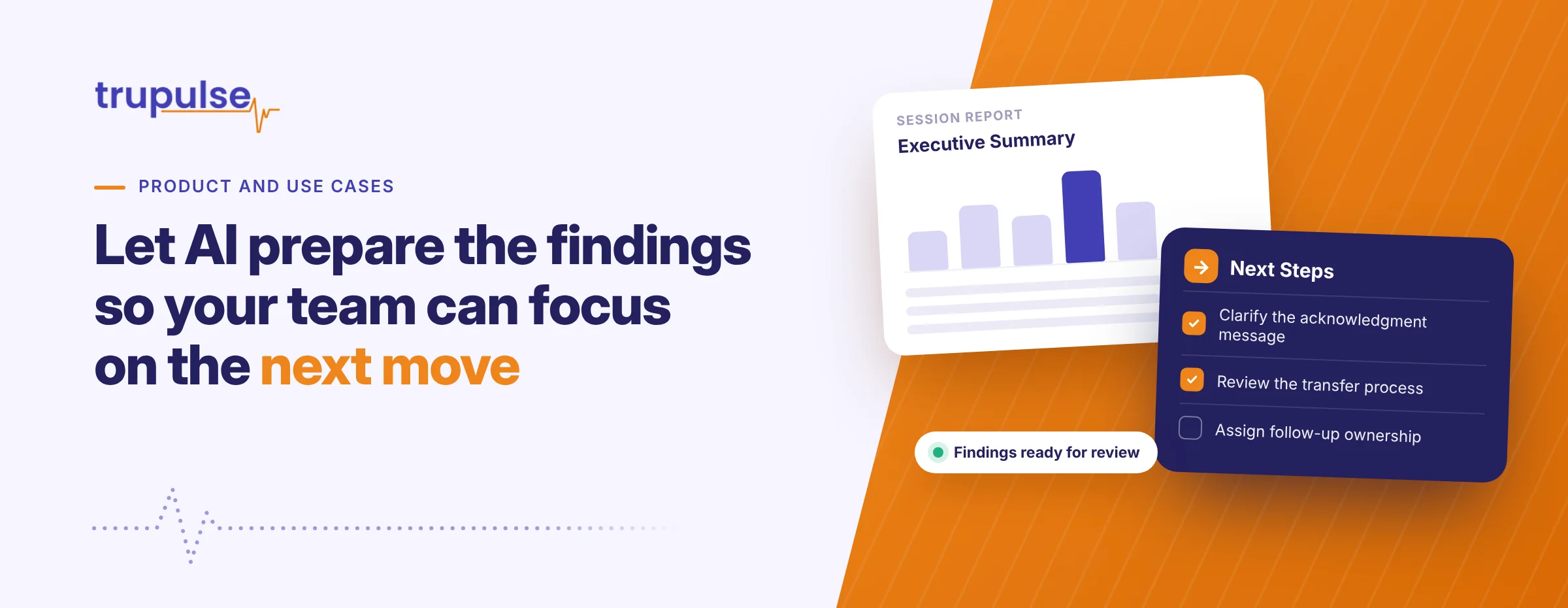
TruPulse reports include Executive Summaries, Key Insights, What to Watch, Conclusions, and Next Steps, alongside results appropriate to the session type. Those outputs give the team a starting point for review. Your service context, priorities, and authority still shape the decision.
Before closing the meeting, name the next action, the person responsible, and when the team will revisit it. If you've chosen not to act yet, record the unanswered question and who will resolve it. Both can be clear, useful outcomes.
Take one finding from your next report and complete this sentence: “Because we heard this experience, we'll explore this option by doing this next.” If everyone understands the connection, you've given the research somewhere practical to go.