The second survey is back, and the score looks better. Your team is ready to share the progress. Then someone notices that this time the invitation went to a different group and one of the key questions was rewritten.
The new results may be useful, but the comparison needs a closer look. Repeating a study gives you another opportunity to learn. A credible account of change also depends on understanding what stayed the same and what moved between rounds. A short comparison record can help you tell that story clearly.
Decide what you want to compare
Imagine a service team asking people about the experience of booking an appointment. In the first round, it asks how easy or difficult booking was. In the second, it asks how satisfied people were with the overall appointment service.
Both questions could be worthwhile. They measure different things. Putting the results on a single rising line would suggest continuity that the wording doesn't support. Keep the first as a booking measure, and treat the second as a new question unless you have a sound basis for linking them.
Pew Research Center's question-writing guidance emphasizes consistent wording and similar questionnaire context when measuring change. Decide which questions you need to preserve before editing the next round. That leaves room to improve the study without accidentally losing your comparison.
Keep a steady core and a place for discovery
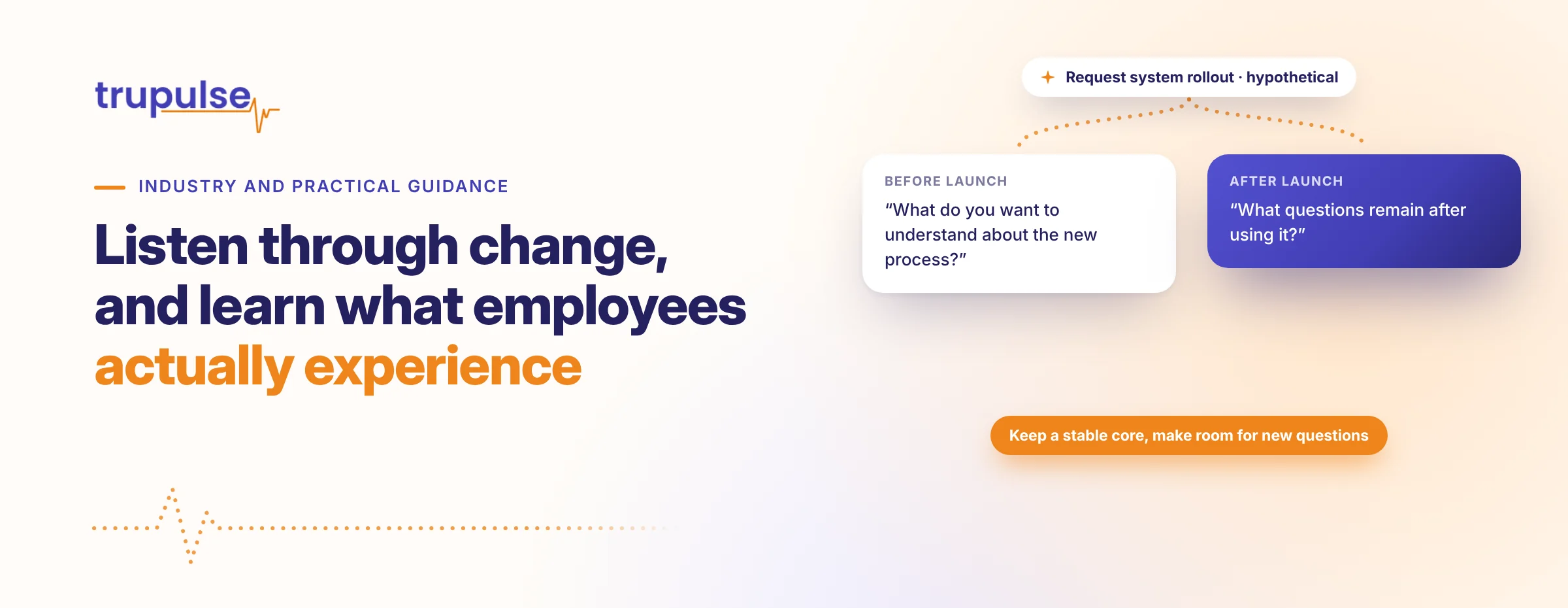
Choose a small set of questions tied to the experience you intend to follow. Keep the wording, answer options, reference period, and relevant order stable where a direct comparison matters. Save a copy of the actual questionnaire used, not just the topic list.
Then make space for new questions. If the first round revealed uncertainty about confirmation emails, the next could explore that issue in more detail. Label those additions as new learning. They don't need an earlier result to be valuable.
Sometimes a question genuinely needs to change. Perhaps people interpreted it differently from what you intended, or the service has changed so much that the wording no longer fits. Explain the break, keep the old version in the record, and start the new measure clearly. A useful question is worth more than a tidy but misleading trend.
Check who answered and how they participated
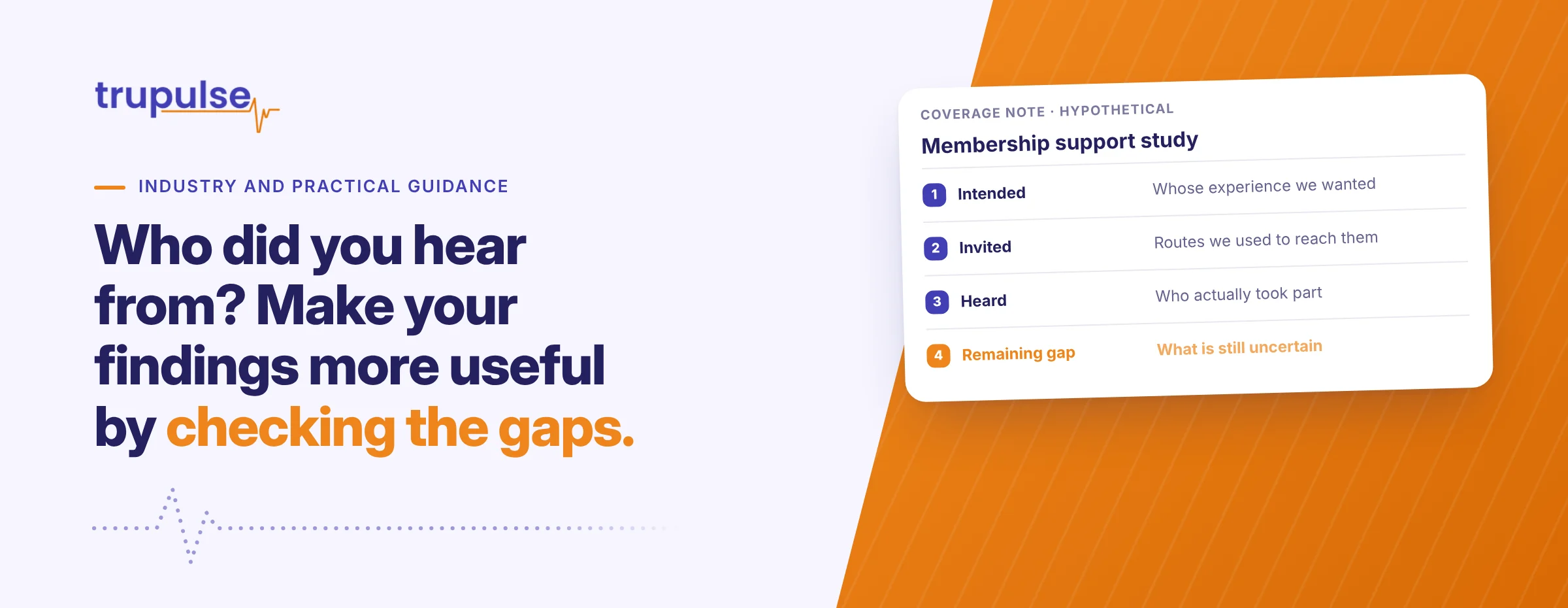
Suppose the first booking survey reached people who telephoned for help, while the second reached people who completed booking online. A difference in results could reflect those different experiences. It would be hard to describe it simply as improvement across the service.
Record eligibility, invitation routes, participation format, field dates, and the relevant experience mix. Note whether the study follows the same people or collects a new set of responses each time. Don't assume a repeat invitation means every respondent is the same person as before.
The format can matter too. In a Pew Research Center experiment comparing telephone and web responses, answers to some questions differed by mode. You don't need to apply those study-specific differences to your own results; the practical lesson is to record a format change when interpreting a comparison.
Keep the change log small enough to use
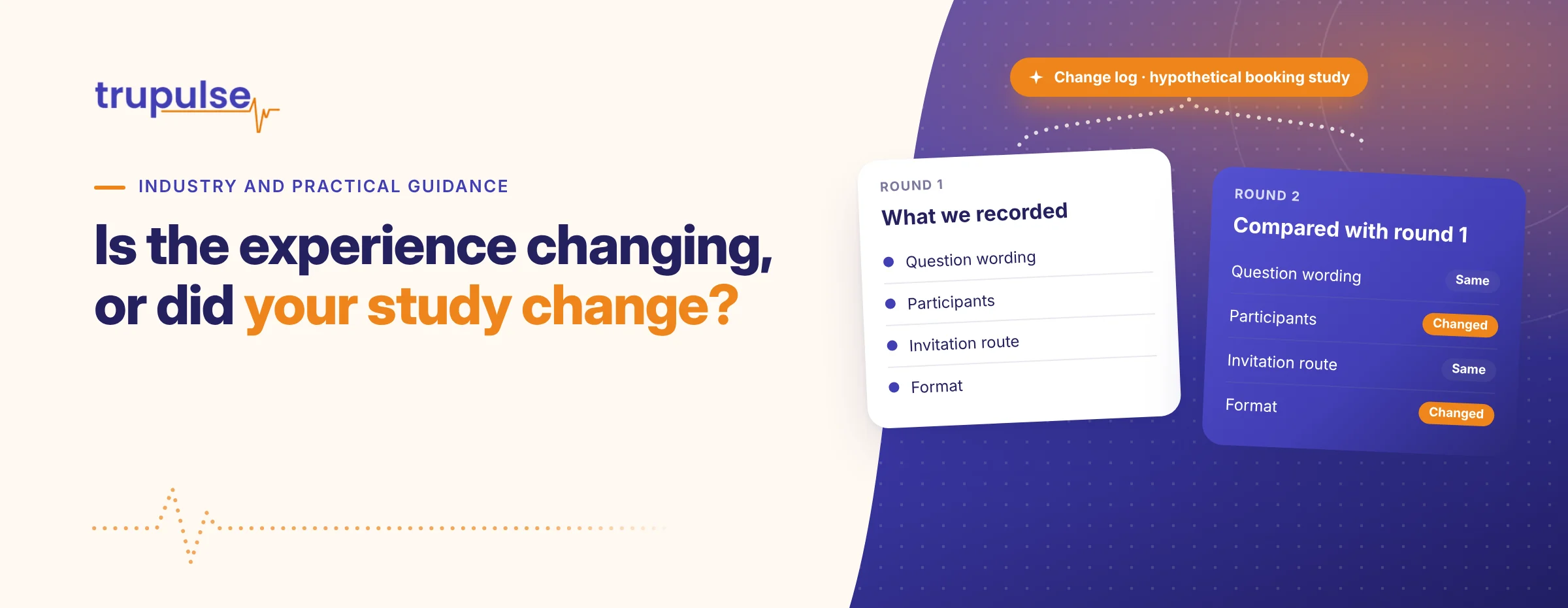
A useful log can fit on one page. Give each item a before and after entry, a reason for any change, and a note about what that means for comparison. Include questions and options, intended participants, recruitment routes, collection format, timing, and relevant service changes.
For the hypothetical booking study, the log might show the move from telephone-support users to online completers and the switch from ease to satisfaction. That would prompt you to present two useful snapshots rather than one continuous measure.
If questions and participation were kept suitably consistent, you can compare the results with the appropriate limits. Still consider what else changed around the service, such as demand, staffing, or the types of appointments offered. A before-and-after difference alone doesn't establish what caused it.
Share the learning, including the breaks
Discussion studies can also be repeated to explore how experiences evolve. Compare the topics and accounts thoughtfully, while recognizing that different prompts or participants can bring different themes forward. The appearance of a theme in one round doesn't measure its prevalence or prove it newly emerged.
Using a previous session as a starting point can make preparation easier; it doesn't establish comparability by itself. Keep the comparison record alongside the actual materials and results, whichever platform you use.
Before commissioning your next round, choose what you want to follow and what you want to discover. Preserve the comparison questions deliberately, explain useful changes, and give the team a clear account of both. That makes the next report easier to trust and easier to use.