An AI-generated research report arrives, and the team can finally spend its meeting discussing what people said. Then someone asks who agreed that the study should answer this particular question. Another person wants to know who will decide what happens next.
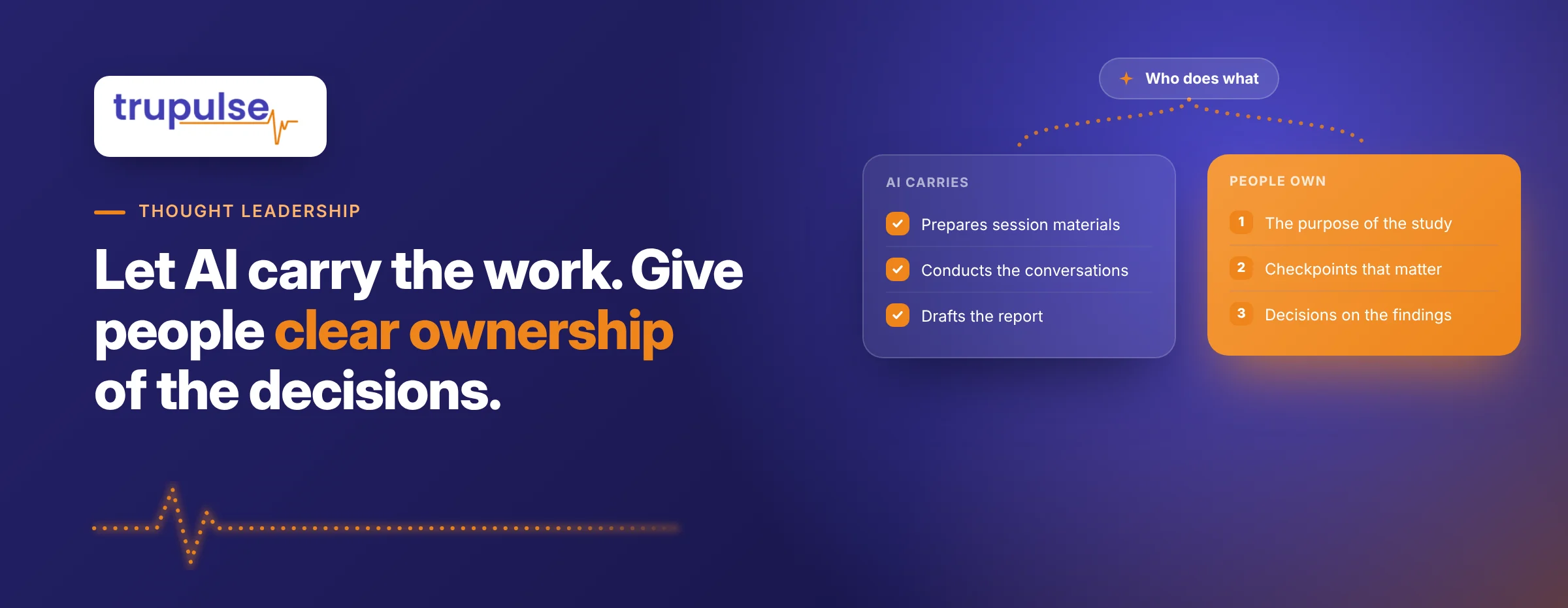
Those are useful questions. AI can take on substantial research work while people remain responsible for its purpose and use. The stronger approach is to name the decisions someone owns, with room for AI to carry the work between them. A general promise that a human is involved leaves too much to the imagination.
Responsibility follows the choice
Imagine a membership organization exploring whether to change its learning program. AI helps prepare the research, conduct conversations, and bring the findings together. The program director still needs to decide what the organization hopes to learn and what kinds of changes it can consider.
That purpose shapes the whole exercise. A study about why members couldn't attend needs a different conversation from one about which future topics interest them. Even an excellent summary can't repair an unanswered question about what the team commissioned.
Ownership also matters when people are invited to take part. Someone must stand behind the explanation of the purpose, AI involvement, and actual information-sharing arrangements. Later, someone needs to judge how the findings relate to the program and approve an organizational response.
NIST's AI Risk Management Framework 1.0 calls for clear roles, responsibilities, and communication around AI risk management. Applied to research, the principle suggests a practical question: which choices are important enough that everyone should know who can make them?
Put attention where it changes the result
For the hypothetical program study, the director could own the purpose and the decision the findings will inform. A research reviewer could check the question design and interpretation. The appropriate organizational owner could confirm participation terms. A program manager could take responsibility for the next action.
These can be different people, or several roles may sit with one person in a small team. The important feature is the clarity of the assignment. A name beside “review” means little unless that person knows what they are reviewing and has authority to change it.
A useful checkpoint asks something specific. Does the session explore the question we need answered? Do the participation details match what will happen? Does the conclusion fit the people and experiences heard? Is the proposed action within our authority? Each question protects a consequential choice.
The same logic helps distinguish a helpful AI output from an approved decision. A proposed next step in a report can open a discussion about changing the program. It doesn't, by itself, authorize the budget, settle competing priorities, or commit the organization to a promise.
Clear ownership can make room for automation
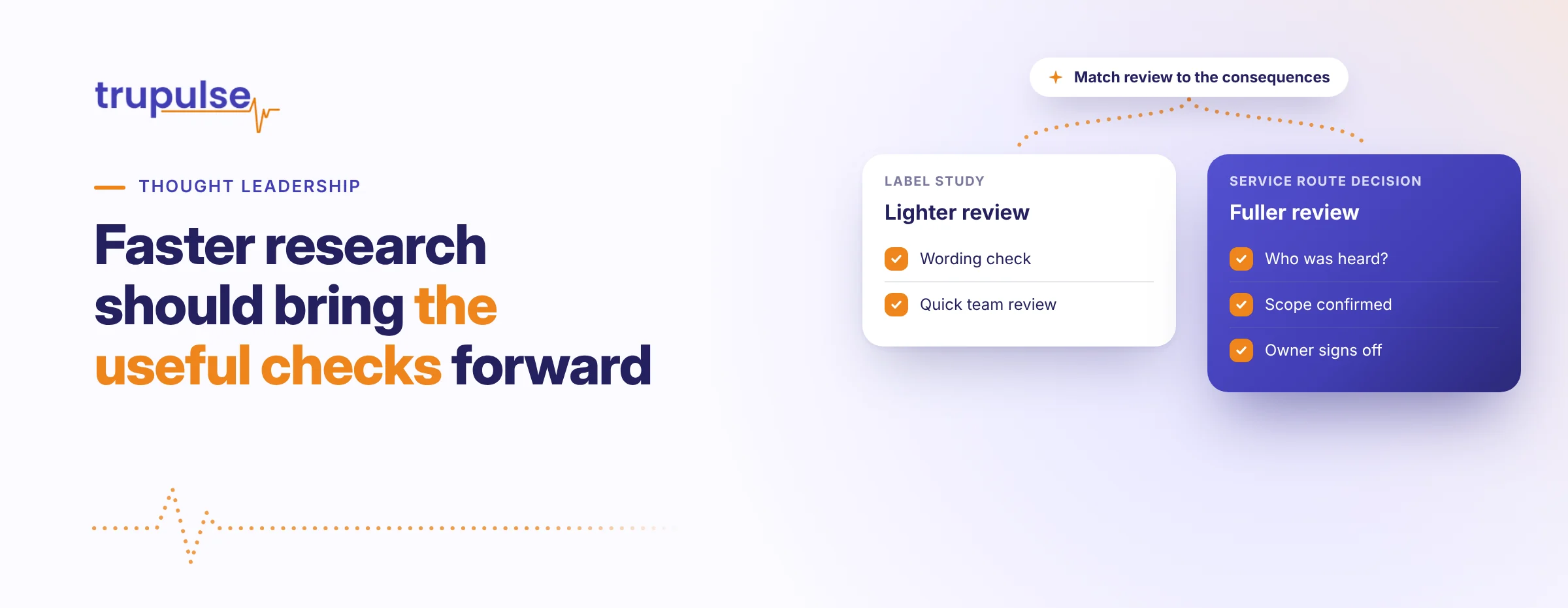
Review can become the work. If every draft sentence needs another meeting, the team may lose the very benefit it hoped AI would provide. People shouldn't have to recreate each task merely to demonstrate that they remain accountable.
That is an argument for proportionate review. Agree on the purpose, the boundaries, and the choices that require attention. Let the supported AI workflow do its job within those arrangements. Bring a person back in when the question, participation terms, interpretation, or intended use needs a decision.
The product details matter here. In TruPulse surveys, creators approve Fixed and Conditional follow-ups in advance. Adaptive follow-ups are created in real time, so the exact questions aren't available for advance approval. Accountability for choosing that approach is different from personally signing off every question it generates.
Clear ownership makes that distinction easier to discuss. The team can decide whether the approach fits the study and what review of the resulting material is appropriate. It can also recognize a problem and assign the response without pretending that advance review covered something it couldn't cover.
Own the use of what you learn
The final responsibility sits where research meets organizational action. Leaders bring context the study may not contain: operational constraints, other evidence, competing needs, and consequences for people affected by the choice. They should be able to explain how the learning informed their judgment.
That doesn't require certainty about everything. It requires an honest account of the finding, its limits, and the reason for the next step. When ownership is clear, AI-led work can support a more considered discussion instead of leaving a polished report to speak for the organization.
Before commissioning your next study, name the person who owns its purpose and the person who can act on its findings. If either role is unclear, resolve that first. It gives all the work that follows somewhere useful to land.