A customer gives onboarding a low rating. You can see that something needs attention. What you still want to know is why.
A separate interview could help, but it means another invitation, another conversation, and more material to bring together. A standard comment box may offer context, yet it leaves the respondent to guess which detail would help you most.
TruPulse lets you add follow-up questions to a survey so you can explore the response while the person is already answering. You choose how those follow-ups work and what you want them to uncover. The AI helps with creation and, when you select Adaptive, generates the follow-up during the survey itself.
Build the survey with help from the creation agent
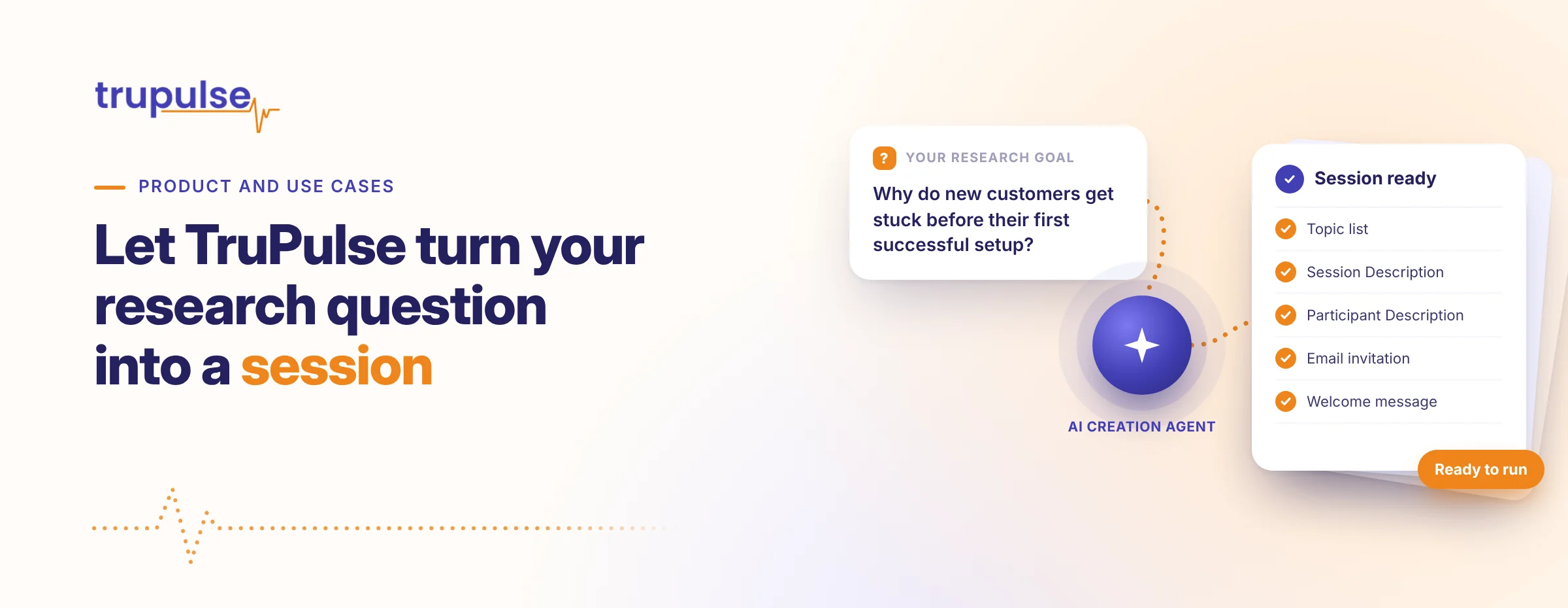
Start with a description of what you want to learn or choose a template. Through a short Q&A, TruPulse’s creation agent clarifies your goals and audience, then generates the base questions and answer options.
You can add, edit, or change those questions. You can also ask the agent to recommend more. That gives you something concrete to review, instead of making a blank questionnaire your team’s first task.
Once the base questions are in place, you can choose whether any need to ask a follow-up question to any of the base questions for more clarity. Write it yourself or ask the creation agent to prepare one for review. You don’t have to add a follow-up everywhere; you can use it where the extra explanation matters.
Choose how the next question gets asked
TruPulse offers three follow-up types, each suited to a different kind of conversation.
A Fixed follow-up asks every respondent the same question. For an onboarding rating, that might be “What most influenced your answer?” You know the wording everyone will receive and approve it in advance.
A Conditional follow-up depends on the answer to the base question. A difficult experience could lead to a question about where someone got stuck; an easy experience could lead to a question about what helped. Each answer option can have its own follow-up. For a free-text base question, the condition can also be based on the sentiment of the response. You review and approve the follow-up wording beforehand.
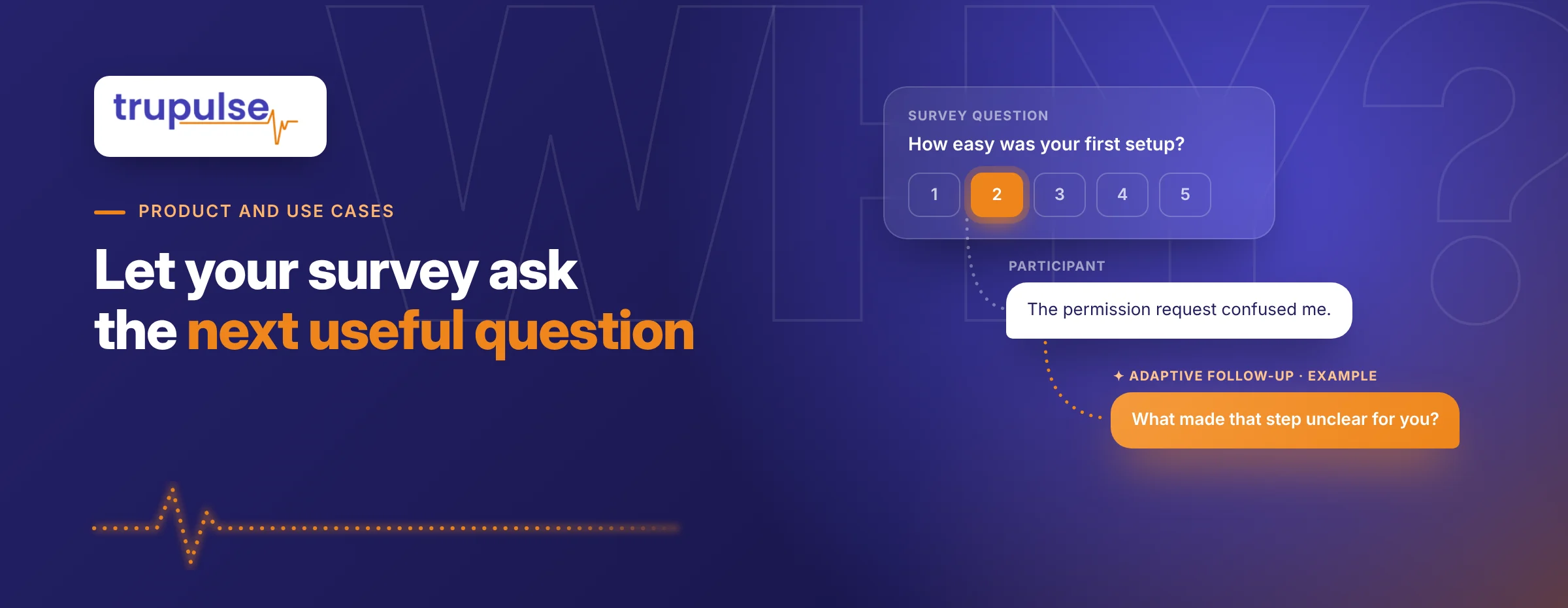
An Adaptive follow-up is generated in real time by the survey session agent, using the participant’s answer. If someone mentions an unclear permission request, the AI can ask about that detail. Because the question is created during the survey, you do not see or approve its exact wording in advance.
That distinction gives you a meaningful choice: prepared wording or a question tailored during the interaction.
Tell the AI which why matters
For each follow-up, you also select its intent. You may want to understand what influenced the answer, hear a concrete example, explore whether the person describes a broader pattern or a one-off experience, or gather suggestions for improvement.
Imagine the onboarding respondent mentions a confusing instruction. An example-focused follow-up could explore the situation they encountered. An improvement-focused follow-up could ask what would have helped.
Both add context, but they serve different purposes. The intent qualifier helps steer the follow-up toward the explanation you actually need. A participant’s description of a broader problem is still their account; the question helps you explore it without automatically establishing how widespread it is.
Read the explanation alongside the result
The benefit continues in the Survey Session Report. Alongside results for each survey question, TruPulse provides an explanatory paragraph summarizing its follow-up responses. Text-based questions can also include illustrative quotes. Because the report goes beyond just giving you a score or rating on a question you will get details on why the respondents answered the way they did providing much more depth on their response.
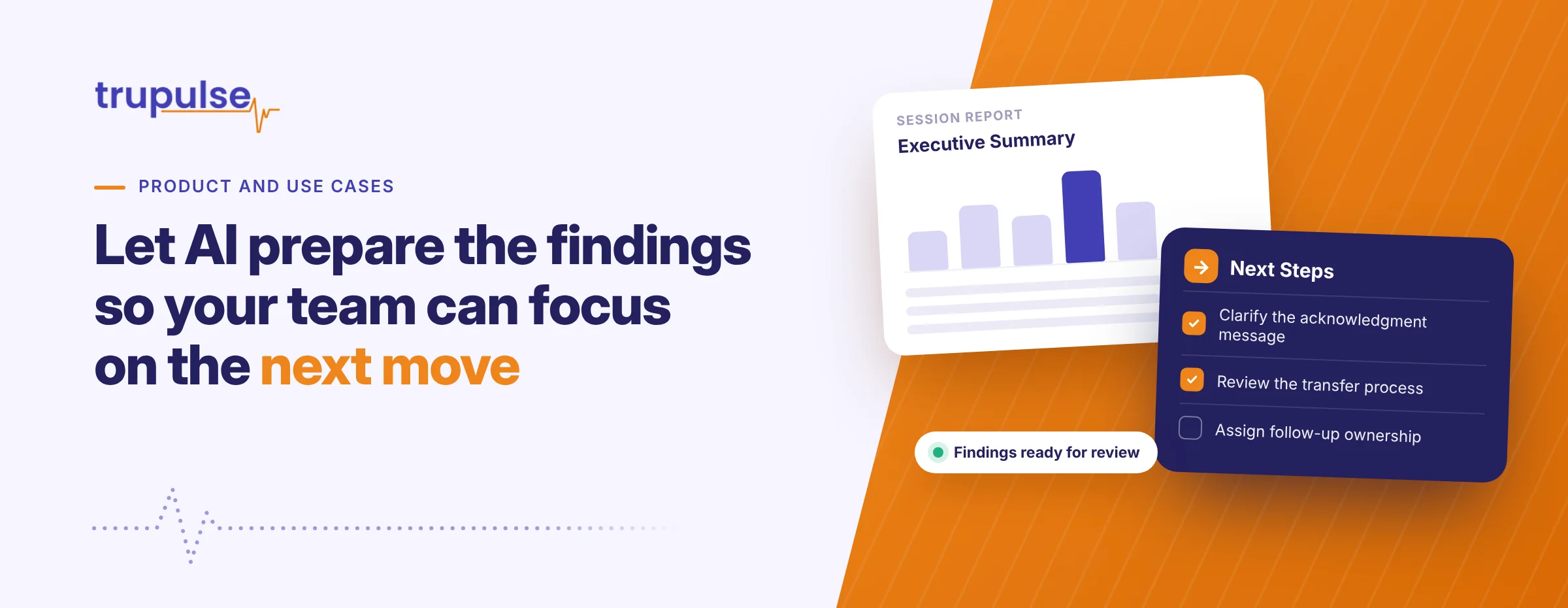
You can review the rating and its context together, with Executive Summaries, Key Insights, What to Watch, Conclusions, and Next Steps helping you see what deserves attention.
Your team gets more than another collection of comments to read from scratch. It gets a report that brings the responses together for review and action.
Book a TruPulse demo to see how survey follow-ups can explore the question behind your next score.