A small organization has an important question about a service, and the people who could answer it are within reach. What feels difficult is the work between the question and a useful set of findings.
Someone has to prepare the study, carry out the conversations, and bring the responses together. For a team already delivering the service, that can make research feel like a project it can't take on. AI offers a useful possibility: taking on supported tasks so a focused listening exercise becomes more practical to attempt. The opportunity is worth judging by the work it handles and the learning the team can use.
Access begins with a manageable question
Imagine a small arts nonprofit wondering why people attend an introductory workshop but don't return for the next session. Its team could ask a large question about community engagement. A more manageable starting point is understanding what attendees expected to do after the introduction.
That question gives the study a useful boundary. People who returned and people who didn't may describe different goals, schedules, or expectations. The team doesn't need to invent a broad score for commitment to the arts. It needs to understand the next step in this particular experience.
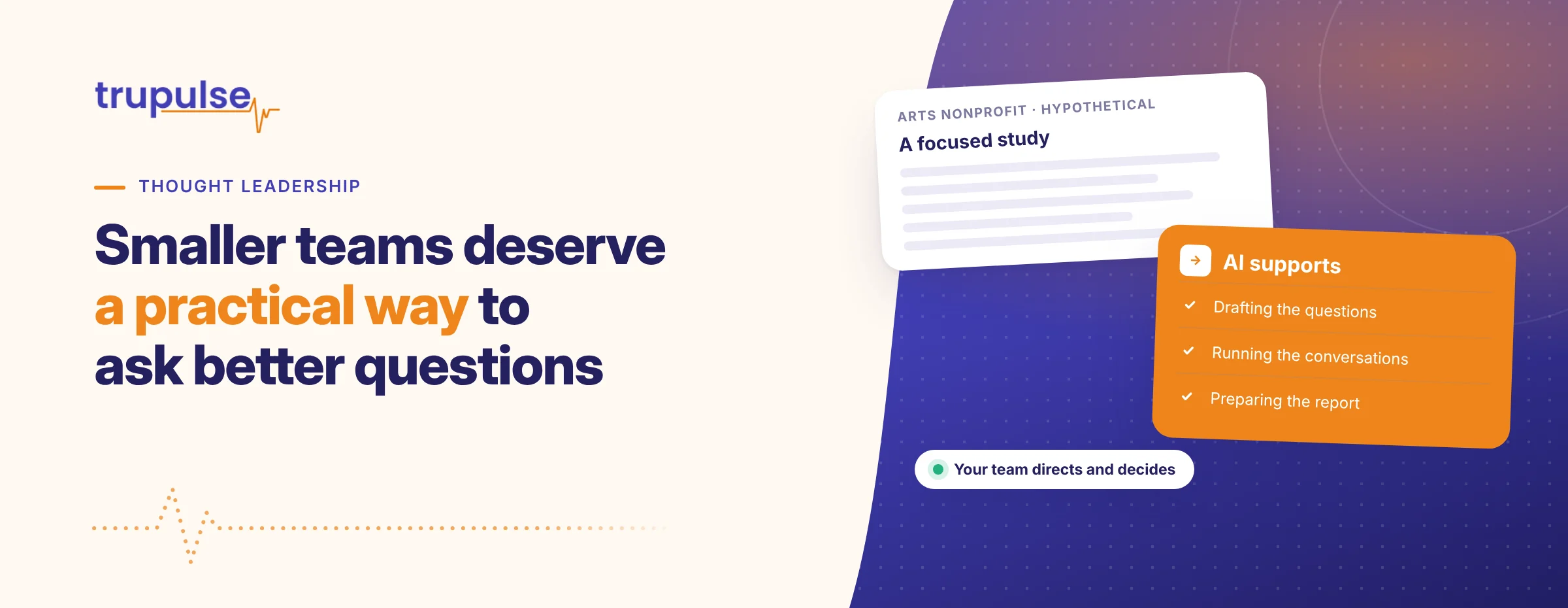
If AI helps prepare and conduct the relevant conversations, the team's role can center on explaining the goal, supplying context, and reviewing what it receives. That is a different proposition from asking a staff member to become the interviewer and analyst for every participant.
The potential benefit is concrete task support. It doesn't require a claim that research has become universally affordable, that specialists are unnecessary, or that every small organization has the same needs.
Let the tool carry work you can name
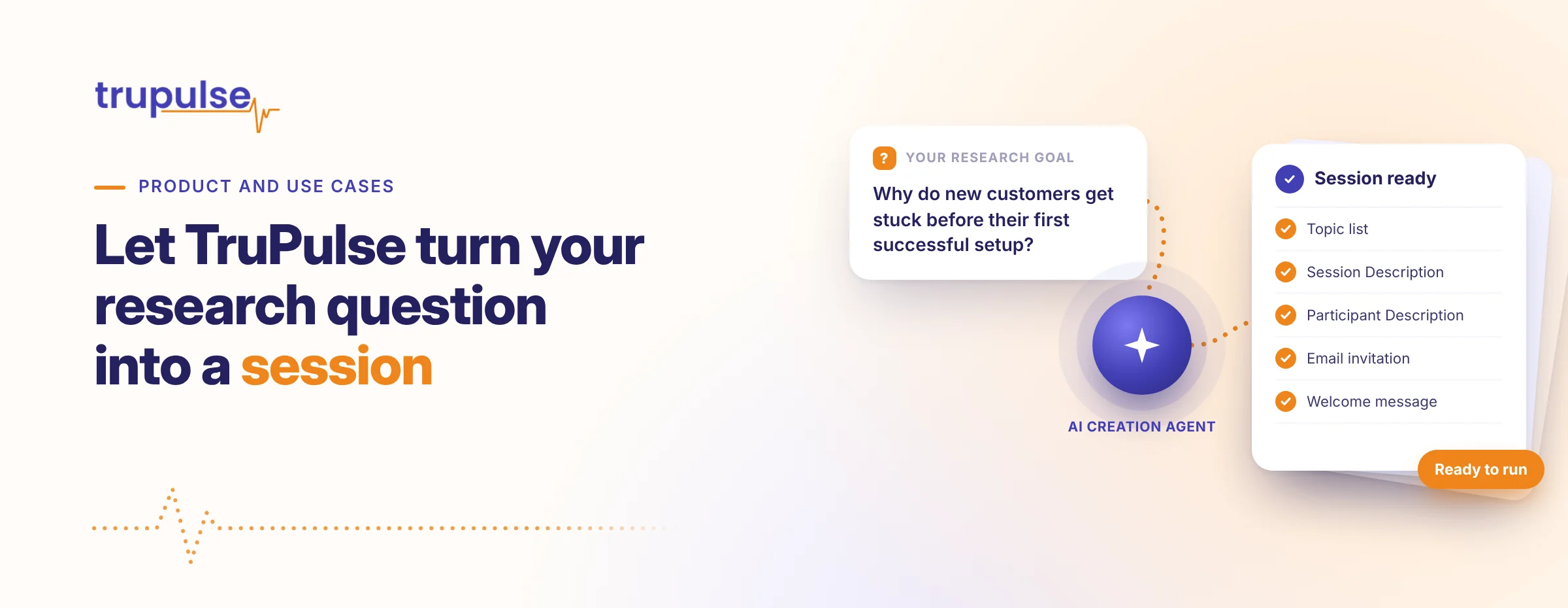
TruPulse offers one example of this approach. A creator can start with a plain-language description or a template, answer a short Q&A, and have the creation agent prepare a discussion topic list. AI-led 1:1 discussions and reports can then help the team explore experiences without conducting every conversation and writing every summary itself.
Discussion reports include topic summaries, illustrative quotes, Key Insights, and Next Steps. For the hypothetical nonprofit, those outputs could give the team a starting point for considering whether the transition between workshops is clear.
When evaluating any tool, name the work it handles and the result your team will review. “AI-powered” is a broad description. “Prepares the discussion and produces topic-based findings” gives a small team something much more practical to consider.
Also ask whether the intended participants can use the chosen format. A supported AI method can be part of a listening plan without being the right route for every person the organization needs to hear.
Expertise still has a place
Making it easy to launch research could also make it easy to ask the wrong question or overread the answer. Ease of production doesn't create an understanding of what the findings can support. Small teams deserve help with that distinction as well as help producing the materials.
The right response depends on the study. A focused exploration of workshop expectations differs from research intended to justify a major funding or access decision. A specialist may be useful for question design, sensitive participation arrangements, sampling, or interpretation when the task calls for it.
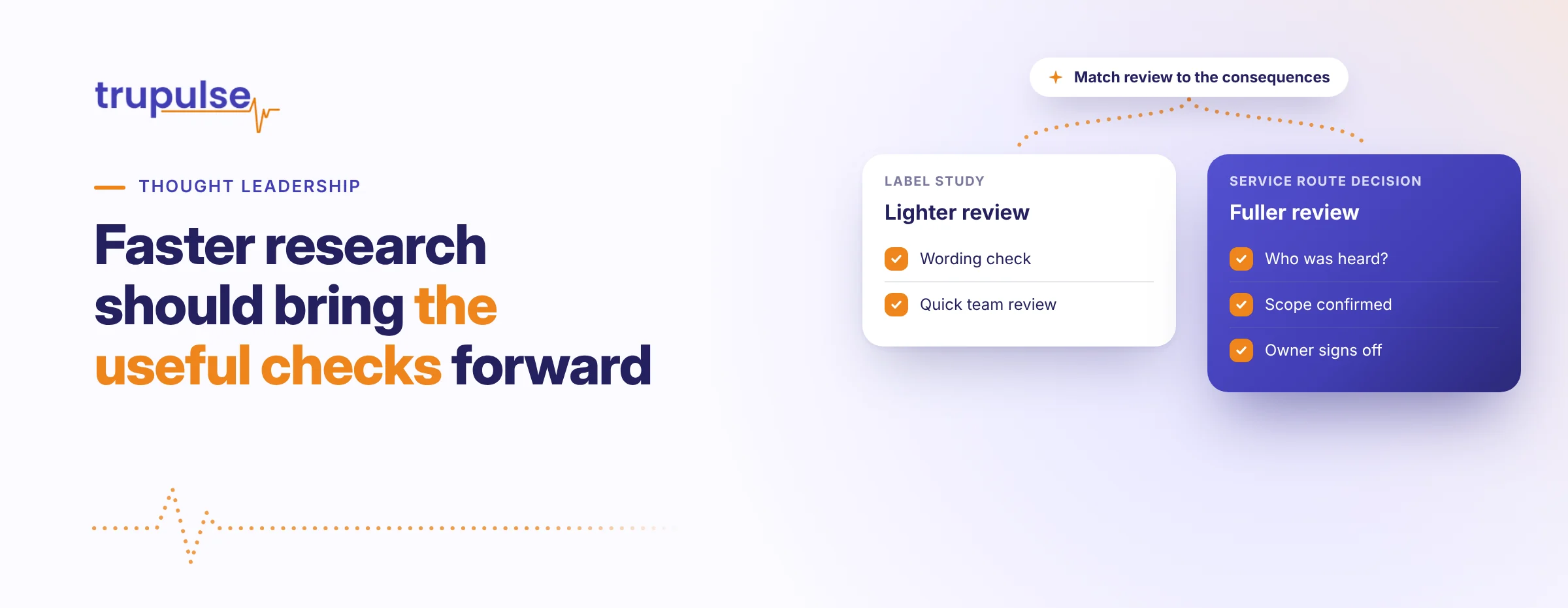
That need doesn't make every modest listening exercise impractical. It suggests matching support to the question and the consequences. A team can learn something useful about a bounded service moment while being clear about whom it heard and what remains uncertain.
The goal is a workable relationship between tools, expertise, and organizational judgment. AI can carry supported research tasks. People provide the direction, understand the local context, and decide when additional expertise is needed.
Make space to use the answer
Before beginning, the nonprofit should be able to name its question, a suitable route to the relevant attendees, and someone who can review the findings. It also needs understandable participation terms and an owner for whatever the team decides to explore next.
These responsibilities can be proportionate to a small project. Their purpose is to make the learning usable. A report that no one has time or authority to consider doesn't become more valuable because it was easy to generate.
For smaller organizations, a practical route into research may begin with one question that has been waiting too long for attention. Choose that question, identify the work AI could carry, and make time to discuss the answer. That is a useful basis for deciding whether the approach fits your team.